How High Can a Beginner Drone Legally Fly?
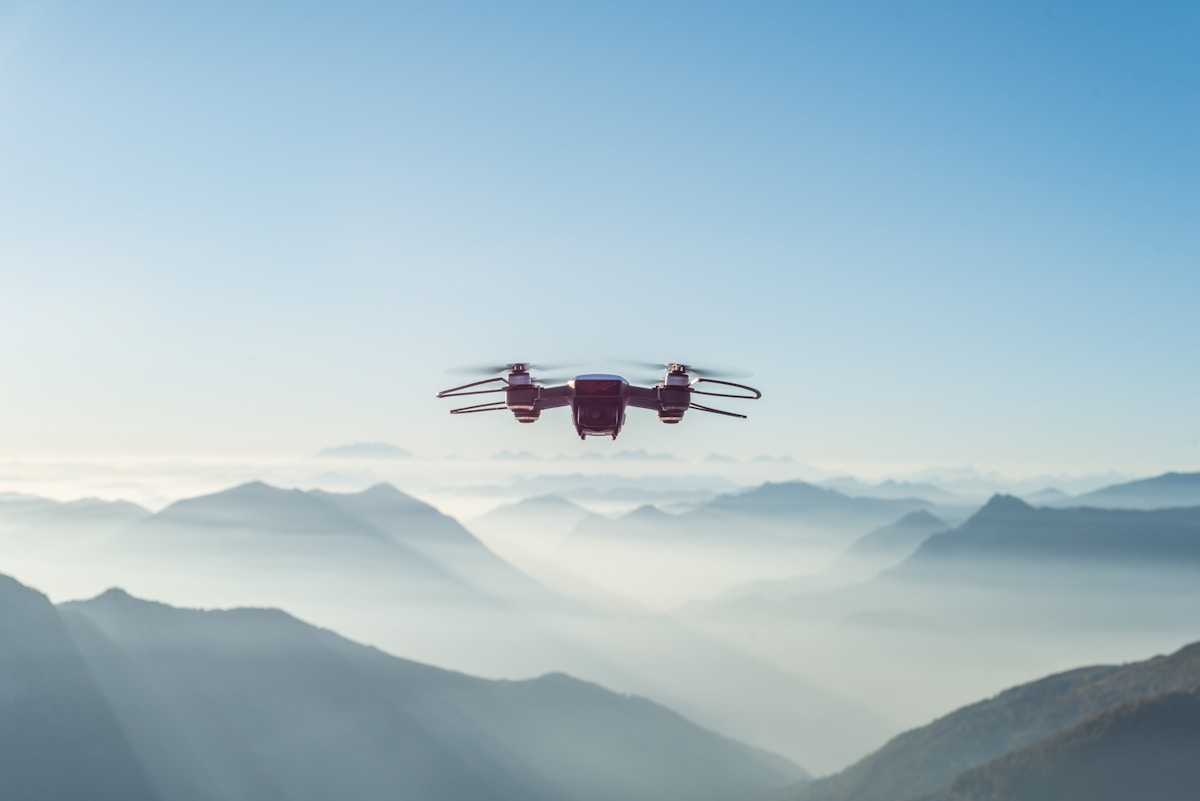
- Primary Signal: How High Can a Beginner Drone Legally Fly?
- Overview: In the United States a beginner drone may fly up to 400 feet above the ground directly below it. The limit is measured from the terrain under the drone, not from where you took off...
- Verification: Analyzed and compiled by FreeSky Aerial editorial monitoring desk.
A beginner drone may legally fly up to 400 feet above ground level in the United States, and 120 metres in many other countries including the United Kingdom and the European Union. The limit applies to recreational flyers and to most commercial flights alike.
The top-ranking guides state the 400-foot rule clearly, but they leave gaps a beginner actually trips over. First, they underplay that the height is measured from the ground directly below the drone. Second, they rarely explain the structure exception correctly, which recreational flyers cannot use. Third, they seldom say that the altitude limit never replaces airspace authorization. This guide closes all three.
Above ground level, not above takeoff. AGL means height above the ground directly beneath the drone, not height above your launch point. The conversion is 400 feet x 0.3048 = 121.92 metres, which is why the US and EU limits are effectively the same rule in different units.
Worked example — flying over a hill. Suppose you launch at the foot of a 250-foot hill and fly over its top, staying 400 feet above the hilltop. Your controller may read 250 + 400 = 650 feet above your launch point, yet you are still legal, because the rule measures 400 feet from the hilltop below the drone. The reverse also holds: flying 400 feet above a valley launch point while the ground drops away can put you higher above the terrain than you think, so watch the ground below, not just the takeoff number.
The structure exception is for certified pilots only. A commercial pilot flying under Part 107 may fly up to 400 feet above a structure while staying within a 400-foot radius of it. Worked example: a 300-foot tower allows a Part 107 pilot to reach 300 + 400 = 700 feet, within that radius. A recreational flyer cannot borrow this exception and stays at 400 feet above ground level.
Altitude is only one rule. Flying below 400 feet does not make a flight legal near an airport, over a crowd, or in restricted airspace. Controlled airspace still needs authorization, and a structure exception never raises an authorization ceiling. Check the airspace for your exact location before every flight, and keep the drone within visual line of sight.
Why 400 feet exists. Manned aircraft are generally required to stay at least 500 feet above the surface over non-congested areas, so the 400-foot drone ceiling leaves a buffer of at least 100 feet of vertical separation in rural areas. The rule protects that buffer, not your drone.
Practical setup for beginners. Set your drone app's maximum altitude below 400 feet, for example 380 feet, so a small overshoot cannot break the rule. Fly in open, uncontrolled airspace for your first flights. Learn the controls low first: altitude is the easiest rule to break by accident when you are watching the camera instead of the height reading.
Bottom line: 400 feet above the ground below your drone is the ceiling, the ground below is what counts, and no altitude trick replaces airspace permission. Set a limit in the app, check the airspace, and keep the drone where you can see it.
Q: Is the limit 400 feet above where I took off?
A: No. It is 400 feet above the ground directly below the drone, so flying over a hill can show a higher number on your controller while still being legal.
Q: Can I fly higher near a tall building?
A: Only as a certified Part 107 pilot within 400 feet of the structure, up to 400 feet above it. Recreational flyers cannot use this exception.
Q: Does staying under 400 feet mean I can fly anywhere?
A: No. Airspace restrictions, airport rules, and crowd rules still apply, and controlled airspace needs authorization regardless of altitude.
Q: What is 400 feet in metres?
A: 400 feet x 0.3048 = 121.92 metres, which is why the 120-metre limit used in the UK and EU is effectively the same ceiling.
📖 Continue Reading the Full Story
Continue reading this article on FreeSky Aerial.
⚡ Access Full Content NowMore from FreeSky Aerial



 🔭 FreeSky Cosmos
How to See Saturn's Rings With Binoculars: A Practical Beginner's Guide
Saturn's rings are visible in ordinary 10x50 binoculars if you know what to look for and hold them steady. Thi...
⚡ CyberTech 568
Step-by-Step Tutorial: Playback Speed Calculator — Video Time at Any Speed (Day 2 Guide)
How to accurately use the Playback Speed Calculator — Video Time at Any Speed on CyberTech 568. Discover essen...
 🤖 WinBar AI
Instagram Photo Downloader: Save Posts in Full Resolution
Download Instagram photos in original quality. Save posts, carousel images, and profile pictures free....
 ☁️ FreeSky Cloud
ROI & Value Audit: GST Calculator — Add or Extract GST & VAT (Day 15 Guide)
How to save time and eliminate guesswork with GST Calculator — Add or Extract GST & VAT on FreeSky Cloud. Disc...