How Rocket Launch Stages Work: Why Rockets Drop Pieces on Purpose
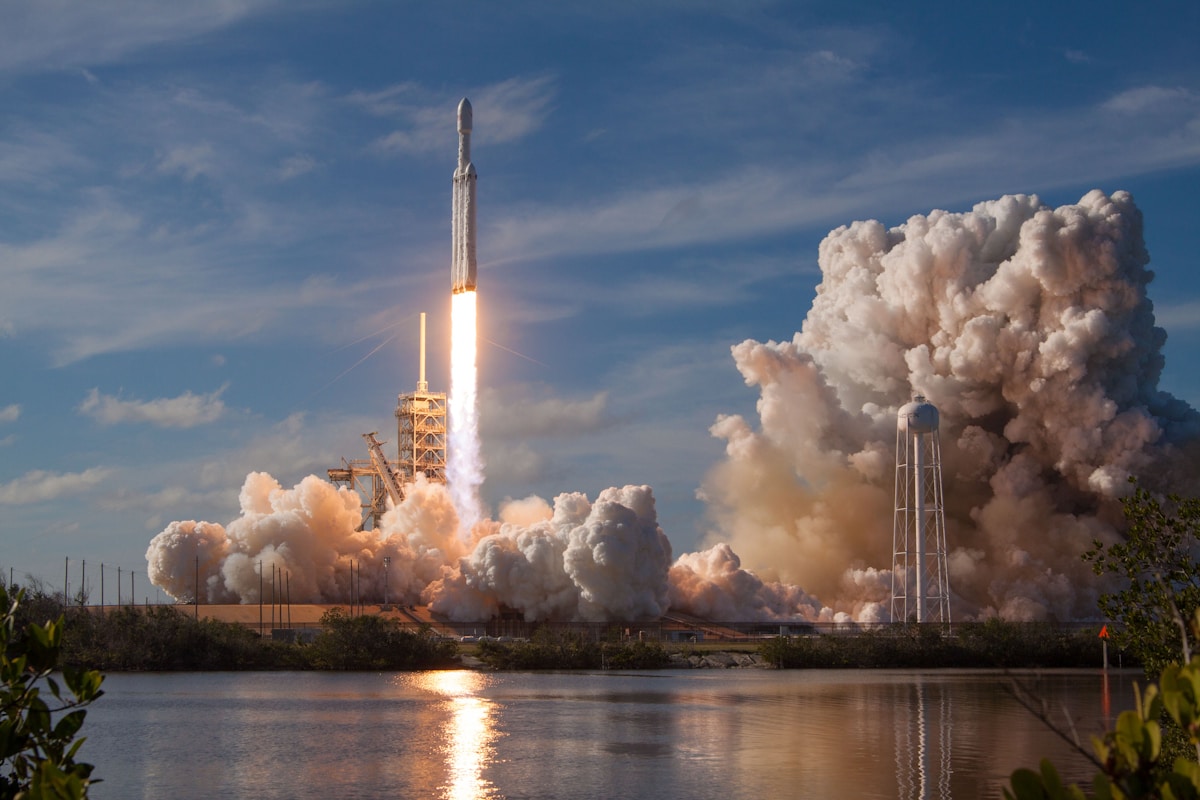
- Primary Signal: How Rocket Launch Stages Work: Why Rockets Drop Pieces on Purpose
- Overview: Rockets shed parts as they climb — and that is the whole point. Learn how staging works, why it saves fuel, and how reusable boosters changed the game....
- Verification: Analyzed and compiled by FreeSky Aerial editorial monitoring desk.
Watch a rocket launch and you will see something that looks wasteful: huge sections of the rocket fall away and drop into the ocean. It seems like throwing away expensive hardware mid-flight. In fact, dropping stages is the clever trick that makes reaching orbit possible at all, and understanding it explains the basic math of spaceflight.
The problem is weight. A rocket must carry all its fuel at liftoff, and the tanks holding that fuel are heavy. As fuel burns, the empty tanks become dead weight that the remaining fuel must still push. Staging solves this by dropping empty tanks and engines as soon as they are used up, so the rocket gets lighter exactly when it needs to go faster.
A typical launch has two or three stages. The first stage is the biggest, with the most powerful engines, and its job is to lift the rocket through the thick lower atmosphere. After a few minutes, its fuel is spent, it separates, and the second stage ignites. The second stage is smaller and more efficient, designed for the thinner upper atmosphere and the final push to orbital speed.
Separation itself is a precise event. Small explosive bolts or pneumatic pushers release the spent stage, and the next stage ignites a fraction of a second later. The spent stage falls back, usually into a planned ocean zone, while the rest of the rocket continues. Watching the first stage separate is one of the most satisfying moments of any launch broadcast.
Reusable rockets changed the economics of staging completely. Instead of discarding the first stage, modern boosters flip around, reignite their engines, and land back on a pad or a ship. This was once considered impossible, because landing a falling skyscraper-sized tube requires extraordinary precision. Today it is routine, and it has cut launch costs dramatically.
Upper stages are usually still discarded, because recovering them from orbital speeds is far harder. They either burn up in the atmosphere or are parked in a safe orbit. Engineers continue to work on full reusability, but the physics of returning from orbit at eight kilometres per second makes it a much tougher problem than landing a first stage.
Why does staging matter to anyone who is not a rocket scientist? Because it is the reason spaceflight became affordable enough for satellites, space stations, and the growing commercial space industry. Every GPS signal, weather forecast, and satellite image depends on a rocket that knew exactly when to let go.
The most famous staged rocket in history is the Saturn V, which carried astronauts to the Moon with three stages. Its first stage burned for under three minutes and lifted the whole stack off the pad, its second stage pushed it toward space, and its third stage sent it on its way to the Moon. Each stage was discarded in turn, and the tiny capsule that returned to Earth was a fraction of the rocket that launched.
Modern reusable rockets rewrote the ending of that story. A Falcon booster returns to land after its first-stage job is done, and can fly again many times, which is why launch costs have fallen so far. The principle is unchanged — drop what you no longer need — but the discarded stage is now recovered instead of lost. The next step engineers are chasing is a fully reusable rocket where even the upper stage comes home, which would make staging a round trip rather than a one-way sacrifice.
The next time you watch a launch, notice the moment of separation. That falling booster is not waste. It is the reason the payload keeps climbing, lighter and faster, toward an orbit it could never have reached carrying everything it started with.
📖 Continue Reading the Full Story
Continue reading this article on FreeSky Aerial.
⚡ Access Full Content NowMore from FreeSky Aerial



 ⚡ CyberTech 568
Internet Latency Test: How Fast Is Your Connection?
Test your internet latency free. Get accurate ping measurements and learn what your numbers mean for gaming an...
🤖 WinBar AI
Decision-Making Framework: GST Calculator — Add or Extract GST & VAT (Day 28 Guide)
How data from our GST Calculator — Add or Extract GST & VAT on WinBar AI. Discover essential eliminates bias, ...
 ☁️ FreeSky Cloud
Comparative Review: Freelancer Net Pay Calculator (PKR) — Upwork, Fiverr & Payoneer Fees (Day 11 Guide)
Why our free online Freelancer Net Pay Calculator (PKR) — Upwork, Fiverr & Payoneer Fees on FreeSky Cloud. Dis...
 🔭 FreeSky Cosmos
Pro Tips & Tricks: Freelancer Net Pay Calculator (PKR) — Upwork, Fiverr & Payoneer Fees (Day 13 Guide)
How professionals get 10x value from the Freelancer Net Pay Calculator (PKR) — Upwork, Fiverr & Payoneer Fees ...