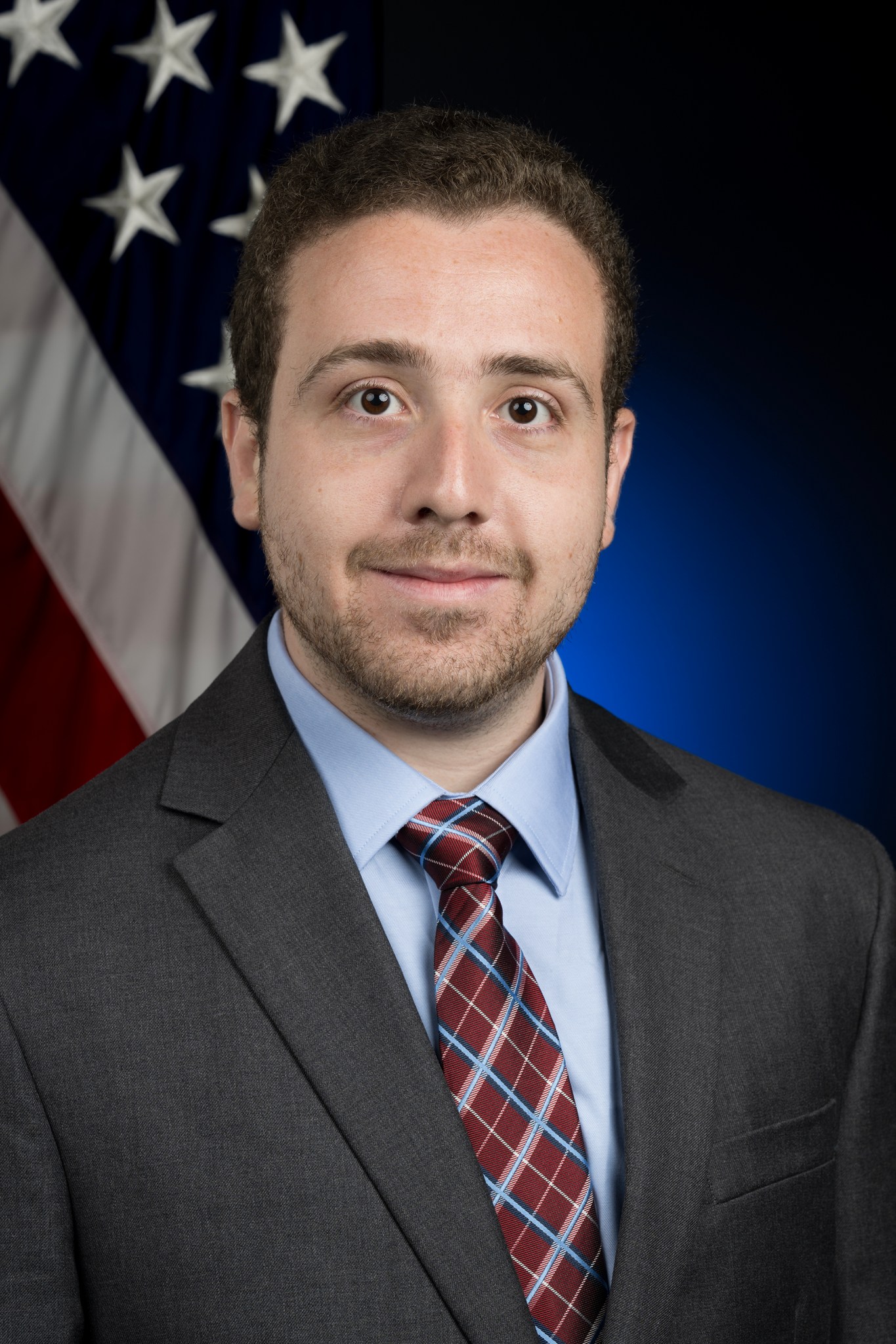
Mapping the Gaps in NASA’s Return to the Moon, featuring Richard Spolzino
Story summary
“I want to be able to look at a rocket launch and say, ‘I touched a piece of this.’” That’s how Richard Spolzino describes the thing he’s chasing. Not a title, not a specific mission, not even NASA itself, just the ability to point at something real and know his work made it possible. At […]
📌 Key Highlights & Takeaways
- “I want to be able to look at a rocket launch and say, ‘I touched a piece of this.’” That’s how Richard Spolzino describes the thing he’s chasing.
- Not a title, not a specific mission, not even NASA itself, just the ability to point at something real and know his work made it possible.
“I want to be able to look at a rocket launch and say, ‘I touched a piece of this.’”
That’s how Richard Spolzino describes the thing he’s chasing. Not a title, not a specific mission, not even NASA itself, just the ability to point at something real and know his work made it possible. At NASA’s Langley Research Center in Hampton, Virginia, Spolzino works within Moon Base’s mission architecture and systems interoperability effort, helping identify what NASA still doesn’t know about the Moon and Mars, and making sure that missing information gets found before it becomes a problem.
“ For me, it kept coming back to where can I have the most impact? Where can my work touch the most things? “
Spolzino didn’t set out to end up here.
He started college as a history major. He switched to a physics track at Santa Clara University, thinking he’d end up in astrophysics. A research stint at Lick Observatory studying interstellar dust polarization taught him two things: the work was fascinating and, “I don’t think the staying-up-all-night thing is for me,” he says.
After graduation, he started down the path of Officer Candidate School in the Navy, hoping to fly jets. It didn’t pan out, and that detour led him to a graduate program at the University of Houston, combining aerospace engineering and space architecture — not the habitat-design kind of architecture people usually picture, but the systems-level kind, where a lunar oxygen plant connects to the rovers that feed it, which connect to the processor, which connects to the user drawing down the resource. “I was always more attracted to how all the pieces work together than to any single piece,” he says.
Ask Spolzino if he dreamed of working at NASA, and the honest answer is no.
“I really admire people who’ve had that drive their whole life,” he says. “For me, it kept coming back to where can I have the most impact? Where can my work touch the most things?” A University of Houston program with strong ties to Johnson Space Center put NASA on his radar alongside other options in industry and government. What ultimately drew him in wasn’t the agency’s name, it was the scope of the problems and the direct line he saw to senior decision-makers shaping the return to the Moon.
Editorial Text & Content Analyzer
Analyze real-time word count, reading speed, and text density metrics on the fly.
Source: NASA.
Read the full story at the original source ↗
For questions: mrsmithcons@gmail.com.
❓ Frequently Asked Questions (Rocket Launches Briefing)
What orbital telemetry or sensor data corroborates this Rocket Launches discovery?
Multi-spectral satellite imagery, radar altimetry, and space agency observational feeds provide calibrated observational data confirming the parameters of this event.
How does this observation impact current aerospace and geospatial modeling?
The recorded metrics refine atmospheric correction algorithms and orbital ephemeris models, enabling higher resolution tracking and trajectory accuracy.
When is the next telemetry downlink or public briefing scheduled?
Real-time space agency mission updates and satellite overpass data are ingested continuously through FreeSky Aerial tracking desks.
🎬 High-Bitrate Master Footage & Flight Telemetry
Uncompressed 4K aerial recordings, GPS flight logs, and camera profiles.
⚡ Stream Master Video NowMore from FreeSky Aerial


China's Lijian-1 Rocket Launches 3 Satellites For Pakistan
China's Lijian-1 rocket launched Pakistan's remote-sensing satellite (PRSS-2), AIRSAT 03 and 04 satellites fro...
UiTM should establish quantum department, ensure country keeps pace, says Zahid
Deputy Prime Minister Datuk Seri Dr Ahmad Zahid Hamidi has called on Universiti Teknologi MARA (UiTM) to estab...
 🤖 WinBar AI
Essential Blueprint: How Leaders Are Navigating Algorithmic Value Bets for High-Yield Performance in 2026
Comprehensive 2026 editorial analysis exploring Algorithmic Value Bets on WinBar AI. Discover key strategic fr...
 ☁️ FreeSky Cloud
Essential Blueprint: How Leaders Are Navigating Free SaaS Tiers for High-Yield Performance in 2026
Comprehensive 2026 editorial analysis exploring Free SaaS Tiers on FreeSky Cloud. Discover key strategic frame...