What Is FPV in Drones and How Does It Work?
- Primary Signal: What Is FPV in Drones and How Does It Work?
- Overview: FPV means First-Person View: a camera on the drone streams live video to goggles so you fly from the drone's point of view. Here's how the video, control and power links work....
- Verification: Analyzed and compiled by FreeSky Aerial editorial monitoring desk.
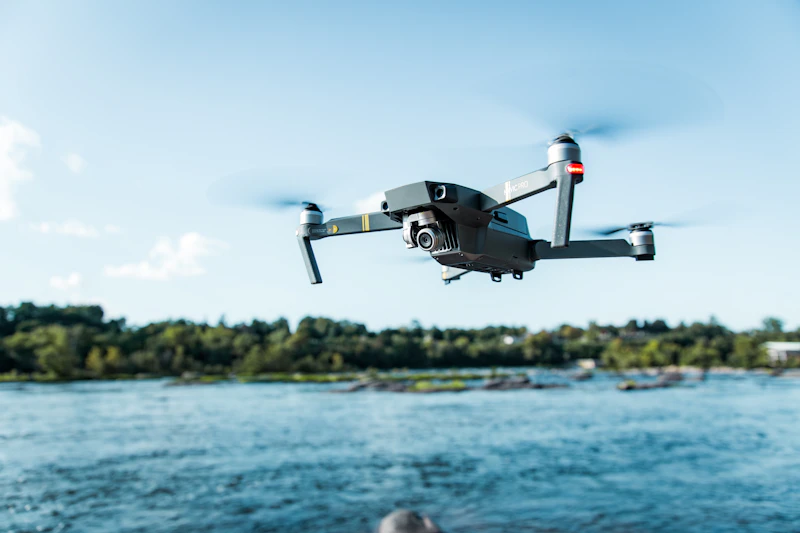
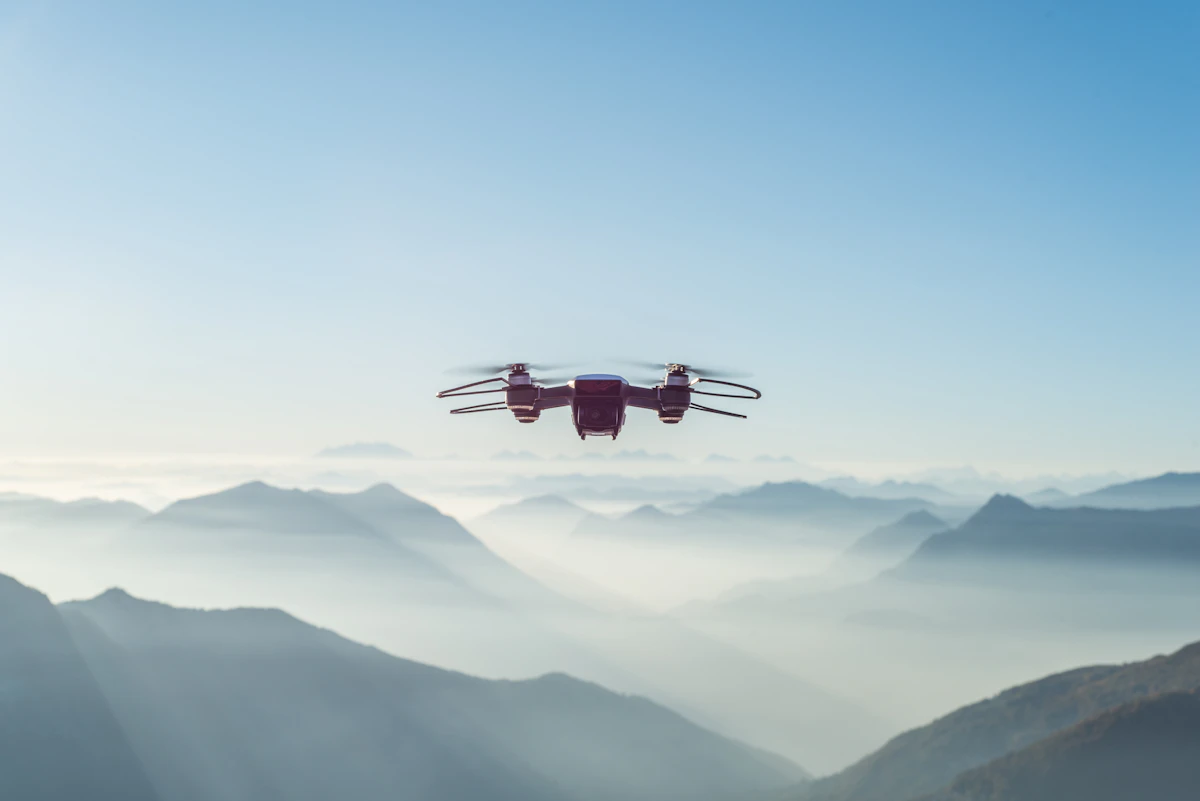
FPV stands for First-Person View. A camera on the drone streams live video to goggles or a screen, so you fly seeing what the drone sees, instead of watching the drone from the ground.
Three separate links make FPV work. The video link runs from the camera to a video transmitter and then to your goggles, usually on 5.8 GHz. The control link runs from your radio controller to a receiver, then to the flight controller, the speed controllers and the motors, usually on 2.4 GHz or 900 MHz. The power link runs from a lithium polymer battery to the motors. If any one link fails, the flight changes completely, so pilots learn each link separately.
Worked example: latency is the delay between the camera seeing something and you seeing it. At 40 mph, a drone covers 58.7 feet per second, so a 0.25 second video delay means it travels about 14.7 feet before you see an obstacle. At 80 mph, the drone covers 117.3 feet per second, so even a 20 millisecond delay means about 2.35 feet of travel. That is why FPV pilots care more about low latency than about a sharp picture: a late picture is a crash.
Analog video has about 15 to 25 milliseconds of latency and degrades gracefully: the picture gets snowy, but you can still fly. Digital video is sharper, with about 28 to 50 milliseconds of latency, but it fails on a cliff edge: it freezes or cuts to black. Published range figures disagree between sources, so treat any quoted range as approximate. The current digital systems are DJI O4, Walksnail Avatar HD and HDZero, alongside analog.
Angle mode self-levels the drone when you release the sticks, and it is the safest way to learn. Horizon mode self-levels too, but lets you flip and roll. Acro mode has no self-levelling: the drone holds the last angle you commanded, which gives full control for racing and freestyle but no safety net. Most pilots learn in Angle, then move to Acro.
If you lose video, you are blind but you still have control: climb, hold position, and land by line of sight if you can see the drone. If you lose the control link, the failsafe takes over: the drone drops, lands, or returns home, depending on how you set it. Set the failsafe before your first flight, and test it on the bench.
Worked example: the real first-year cost. A beginner ready-to-fly kit costs about $300. Add a simulator for $25, four spare batteries at $30 each for $120, and spare propellers and frames for $40. The total is $300 + $25 + $120 + $40 = $485 for the first year. Expect crashes: spare parts are part of the budget, not an accident. Note the battery limit too: an FPV quad flown hard lasts 3 to 6 minutes per pack, against 25 to 40 minutes for a GPS camera drone, so three packs give you only about 15 minutes of flying.
The consensus is 10 to 40 hours in a simulator before your first real flight. Popular simulators are Liftoff, Velocidrone and Orqa FPV.SkyDive. Then fly a tiny whoop indoors, then move outdoors, then specialise in racing, freestyle, cinematic flying or long range. FPV quads fly at 60 to 120 mph or more, against 30 to 45 mph for a regular camera drone, so speed arrives faster than skill.
In the US, you must register a drone over 250 grams, recreational pilots must pass the free TRUST test, and commercial flying needs a Part 107 certificate. Goggles do not satisfy visual line of sight, so a spotter is required, and the limit is 400 feet above ground. In the UK, a Flyer ID is required from 100 grams since 1 January 2026, and an Operator ID is required from 100 grams when the aircraft has a camera. Check your local rules before flying.
Learn how far a drone can fly in How Far Can a Drone Fly From Its Controller? and how to make your first flight in How Do You Fly a Drone for the First Time?
Q: Do you need a licence to fly an FPV drone? A: For fun in the US you need registration over 250 grams and the free TRUST test; commercial flying needs a Part 107 certificate. Rules differ by country, so check your local aviation authority.
Q: Can you fly FPV with a phone screen instead of goggles? A: Yes, many systems let you watch the video feed on a phone or monitor, but goggles give a wider, more immersive view and block out daylight.
Q: Do FPV drones need GPS? A: No. Most FPV racing and freestyle quads fly without GPS and rely on the pilot. GPS is used mainly for return-to-home failsafes and long range flying.
Q: How fast can an FPV drone fly? A: FPV quads reach 60 to 120 mph or more. In the US, commercial flights under Part 107 are capped at 100 mph groundspeed.
More from FreeSky Aerial